
Open vs Enclosed Transport: Which to Choose?
How open and enclosed trailers differ in exposure, price, insurance, low cars, weather, and scheduling so you pick the right equipment.
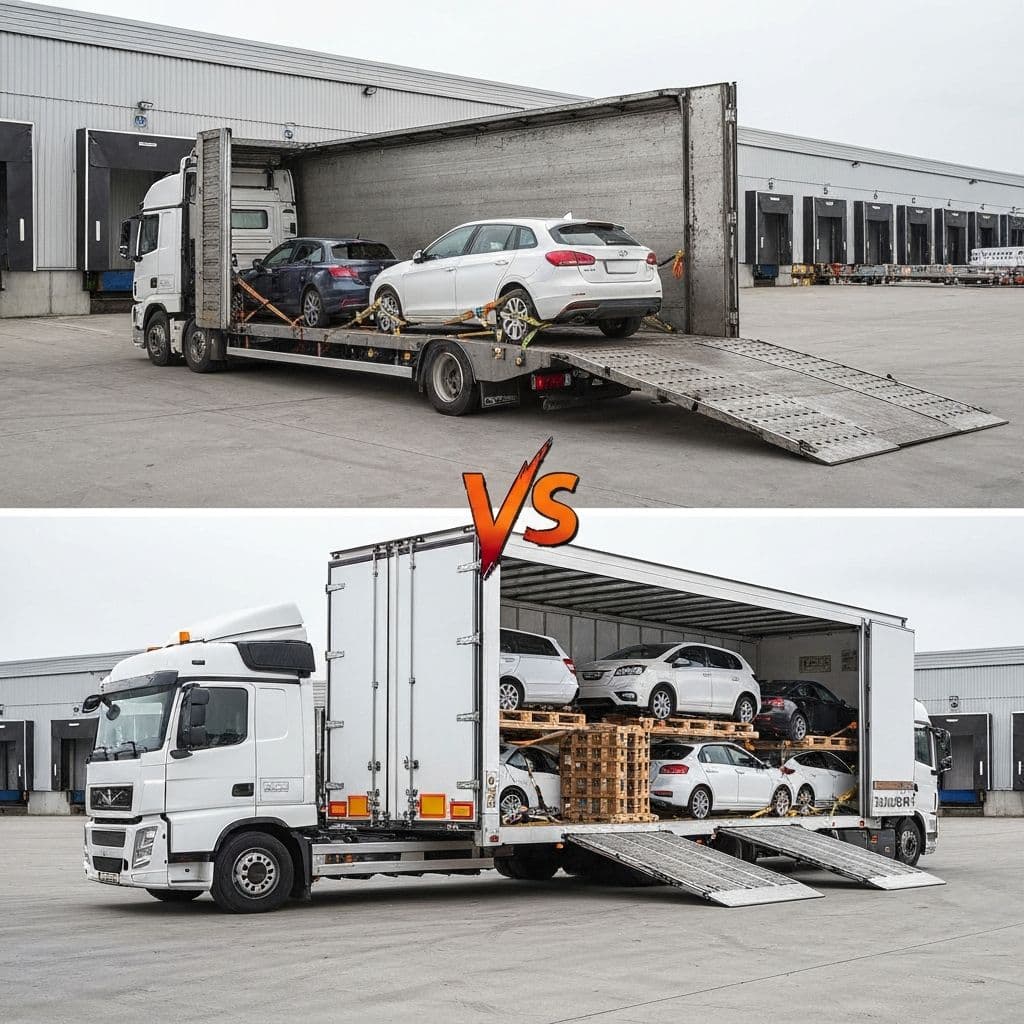
Almost every customer asks the same question at some point: should I ship open or enclosed? The honest answer is that most vehicles ship open in the United States every day without drama, while enclosed exists for a narrower set of priorities where the extra shell around the car is worth the premium. The decision is less about fear and more about matching the equipment to the value, finish, and schedule you care about.
Open carriers are the multi level trailers you see on interstates. They move sedans, SUVs, trucks, and vans in stacks that make efficient use of deck space. Your vehicle is strapped to hardened points on the frame or tires according to the carrier's standard securement plan. It will see the same basic environmental exposure it would see on a long highway drive: rain, dust, sun, and the occasional small road chip. For daily drivers and mainstream used cars, that profile is normal and insurable.
Enclosed trailers wrap the vehicle inside walls and a roof. Some rigs are hard sided box trailers. Others use soft sides with heavy curtains. Both styles keep most road spray off the paint and reduce the chance of debris impacts compared with an open deck. They also create a calmer environment for low slung cars that need gentle ramp angles and soft tie down strategies. If you are moving a show car, a freshly painted classic, or a high value exotic, enclosed is often the sensible default even when open would technically work.
Pricing reflects supply and demand for equipment types. Open trailers are common, so carriers can bundle loads efficiently and keep per vehicle economics reasonable. Enclosed units are fewer in number, carry fewer cars per trip, and often run with more specialized handling. Expect enclosed to cost more on the same lane, sometimes substantially more, depending on season and route. If budget is tight and the car is a standard commuter, open is usually where you should start unless your coordinator flags a specific risk.
Think about paint and trim sensitivity. Brand new luxury vehicles sometimes ship enclosed from the factory for a reason: dealerships want predictable arrival condition. A single owner garage kept sports car headed to a concours may deserve the same mindset. A high mileage commuter with existing road rash may not gain much marginal protection from enclosed shipping relative to the extra spend.
Think about clearance and suspension. Lowered vehicles can scrape on steep ramps if the approach angle is wrong. Enclosed trailers often pair with experienced operators who load low cars every week. That does not mean open cannot work, but it does mean you should disclose ride height, splitter size, and any air suspension quirks up front so dispatch assigns the right trailer and driver skill set.
Think about weather on your specific lane and month. Open trailers cross snow belts, deserts, and coastal humidity. Most vehicles handle that fine. If you are shipping immediately after fresh paint or wet sand, enclosed can reduce the chance of road film bonding to soft finish work. If you are shipping in mild spring weather on a short lane, open may be perfectly adequate.
Insurance still matters in both modes. Cargo coverage attaches to the motor carrier moving the freight, with limits and deductibles spelled out in their filings. Enclosed does not automatically mean unlimited coverage. Ask what the carrier's limit is, whether your declared value needs documentation, and how the inspection process works at pickup and delivery. Good paperwork beats assumptions every time.
Service speed can differ slightly between modes because the pool of trucks is different. On some routes, enclosed may book a day or two farther out simply because fewer rigs exist. If you are on a hard deadline, tell your coordinator early so they can weigh open availability against enclosed timing instead of promising a date that equipment cannot support.
If you are torn, request both quotes for the same pickup window and compare not only price but also what each option includes. Ask about cancellation terms, whether inoperable fees apply, and whether the carrier is the same company you saw on the paperwork. When the details line up, pick the mode that matches how you would feel if a small chip appeared on a bumper: annoyed but fine on a commuter, unacceptable on a trailer queen.
We are happy to talk through your specific vehicle and route. Some customers split the difference by shipping enclosed one direction and open the other, depending on season and resale plans. There is no universal trophy answer, only the answer that fits your car and your budget.